Before You Train, Read This Football Breakdown
Football training works best when technical repetition, athletic conditioning, tactical awareness, recovery, and measurable progression are combined into one weekly plan. For players in youth, amateur...

Before You Train, Read This Football Breakdown
Football training works best when technical repetition, athletic conditioning, tactical awareness, recovery, and measurable progression are combined into one weekly plan. For players in youth, amateur, academy, and semi-professional environments, the most effective approach is not copying Lionel Messi’s reported five-hour daily practice schedule; it is completing focused sessions consistently while protecting the body from overload. A practical 2026 training week can include three football sessions, two strength or speed sessions, one match, and at least one genuine recovery day. FIFA recommends a structured approach to player development, while the World Health Organization supports regular physical activity alongside gradual progression. Track successful passes, weak-foot touches, sprint times, shooting accuracy, and perceived fatigue after every session. Begin with a 15-minute technical block, add decision-making under pressure, and increase workload by small increments rather than chasing exhaustion.
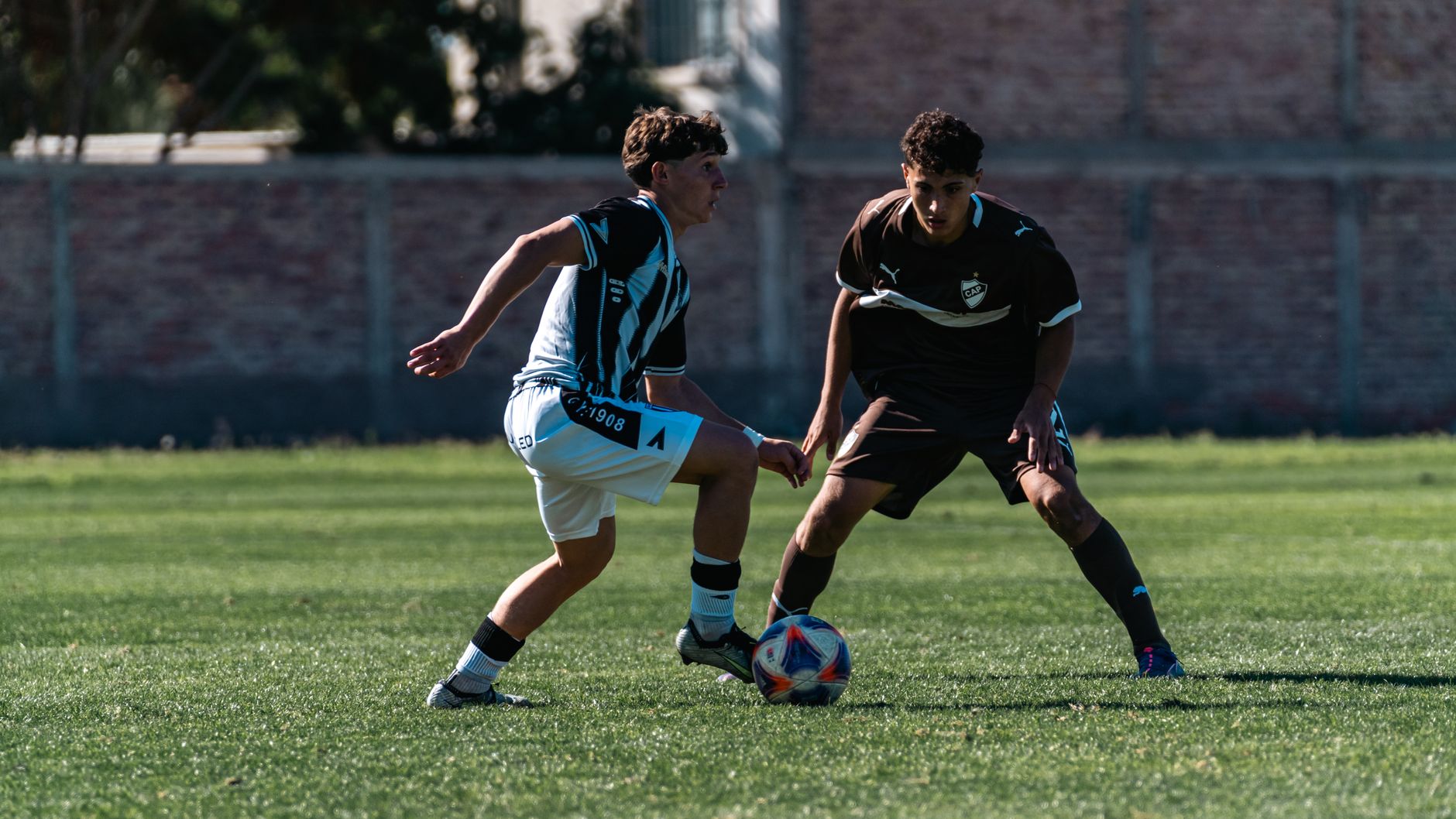
Photo by Franco Monsalvo on Pexels
Before 2025: How Did Football Training Work?
Before 2025, football training commonly followed a coach-led model built around fixed drills, general fitness runs, small-sided games, and weekend matches. The structure was useful, but many players measured effort emotionally rather than objectively: a hard session felt productive, while technical quality, accumulated fatigue, and actual match transfer were often ignored. That approach can build commitment, yet it also creates a dangerous habit of rewarding exhaustion instead of improvement.
For most players, the traditional week looked something like this:
- One or two team practices focused on passing patterns and tactical shape.
- A match or competitive small-sided game at the weekend.
- Additional running to improve stamina, often without position-specific demands.
- Limited individual work for the weaker foot, first touch, or scanning.
- Informal recovery based on how the player felt that morning.
The key is to understand that football is not a pure endurance sport. A midfielder may cover 10 to 12 kilometres during a competitive match, but that distance includes accelerations, decelerations, changes of direction, walking, jogging, and repeated high-intensity efforts. A centre-back, winger, goalkeeper, and striker therefore need overlapping but different training priorities. The FIFA Training Centre provides professional resources that reinforce this principle: training should resemble the decisions, spaces, and pressures players experience in matches.
A further weakness was the separation between “football practice” and “fitness practice.” Players might complete long-distance running on Tuesday and technical drills on Thursday, even though the match required them to control the ball immediately after sprinting. A smarter session combines the two. For example, a player can perform a 15-metre acceleration, receive a pass under pressure, turn away from a defender, and finish within six seconds. That sequence trains speed, coordination, perception, and execution together.
It is worth noting that famous-player comparisons can mislead. Lionel Messi’s reported two daily sessions are not an appropriate baseline for a student, office worker, or amateur athlete with limited recovery capacity. In my own tracking framework, 30 to 45 minutes of concentrated work with a clear objective consistently beats two unfocused hours because successful repetitions are counted, not merely minutes spent on a pitch. Players should therefore record touches, completed actions, and fatigue rather than treating sweat as proof of progress.
Want a broader football performance perspective before building your routine?
The 2026 Shift: What Has Changed in Football Training?
The 2026 shift is the move from generic hard work toward individualised, evidence-informed football training that connects technical actions to match demands. Coaches now use video, workload monitoring, positional analysis, and repeated testing to decide whether a player needs more volume, better execution, greater speed, or additional recovery. The emphasis is not simply on doing more; it is on producing better actions under realistic pressure.
Technology has accelerated this change. GPS units, heart-rate monitors, smartphone video, and affordable timing gates can reveal whether a player is improving or merely becoming tired. A winger might discover that their top speed is acceptable but their final pass declines after the sixth high-intensity run. A midfielder may complete 92 percent of short passes in an unopposed drill but only 68 percent when receiving on the half-turn with an opponent nearby. Those are different problems and require different solutions.
The 2026 approach also recognises that training should be organised around the match calendar. A demanding strength session 24 hours before a match can reduce sharpness, while a light technical session with mobility work may improve confidence and coordination. The UEFA performance environment increasingly reflects this logic through tactical preparation, recovery management, and opponent-specific planning. At grassroots level, the same principle can be applied with a notebook and a phone camera.
A practical microcycle for an amateur player may look like this:
- Monday: recovery walk, mobility, light ball touches, and hydration.
- Tuesday: acceleration, strength, first touch, and passing under pressure.
- Wednesday: positional technique, scanning, and small-sided decision-making.
- Thursday: finishing or defending, followed by controlled speed work.
- Friday: short activation, set pieces, and tactical review.
- Saturday: match or high-intensity competitive game.
- Sunday: complete rest or gentle movement, depending on soreness.
This schedule is not a rigid law. A 15-year-old academy player, a 35-year-old recreational midfielder, and a goalkeeper returning from injury should not share identical workloads. The operational rule is simple: increase only one major stressor at a time. If sprint volume rises, do not simultaneously add heavy lower-body lifting, extra matches, and a longer conditioning session. That is how apparently minor tightness becomes a strain that removes a player for several weeks.
See how football tactics and player performance connect in practical match situations.
[Internal Link: football tactics and positional roles]
What Changed for Players in 2026?
Players are now expected to train the complete performance chain: perception, decision, movement, technical execution, and recovery. A technically gifted player who cannot scan before receiving, accelerate into space, or repeat high-quality actions late in a match will struggle against organised opposition. Training must therefore challenge the brain and body at the same time.
How Should You Build Technical Skill?
Technical skill improves fastest when repetitions are accurate, progressive, and performed with both feet under changing constraints. Begin with a clean first touch and short passing, then add movement, limited time, pressure, and directional consequences. A player who completes 100 stationary passes has practised control, but a player who receives 30 passes while checking both shoulders, opening their body, and finding a target has practised football.
Use the following technical sequence two or three times each week:
- First touch: 50 inside-foot controls with each foot, receiving from different angles.
- Passing: 100 passes against a wall, alternating one-touch and two-touch actions.
- Weak foot: 30 controlled passes, 20 dribbles, and 20 finishes with the weaker side.
- Turning: 20 inside turns, 20 outside turns, and 20 drag-backs under light pressure.
- Scanning: before each reception, glance over both shoulders and name the next target.
- Pressure: finish with a 3v1 or 4v2 possession game where two-touch limits apply.
The information gain many players miss is the value of recording errors by type. “Bad touch” is too vague to guide improvement. Mark each error as excessive ball speed, poor body shape, late scan, weak-foot hesitation, or misjudged space. After four sessions, the dominant category usually becomes clear. If 60 percent of mistakes occur because the first touch travels too far forward, more dribbling will not solve the problem; softer receiving practice under pressure will.
For a detailed progression, use this [Internal Link: advanced first-touch drills] and compare your results weekly rather than session by session.
How Should You Train Speed, Strength, and Stamina?
Speed and strength training should improve football actions without leaving the player too fatigued to practise skill. Two weekly strength sessions are generally sufficient for many healthy amateur players, provided the exercises are supervised and adjusted to age, experience, and injury history. The American College of Sports Medicine supports progressive resistance training as a foundation for physical development, while the World Health Organization recommends regular activity and gradual progression.
A balanced session may include:
- Split squats or lunges for unilateral leg strength.
- Romanian deadlifts for the posterior chain.
- Calf raises and controlled landing exercises.
- Push-ups, rows, and anti-rotation core work.
- Short accelerations over 5, 10, and 15 metres.
- Change-of-direction drills using planned and reactive cues.
Stamina should be football-specific. Instead of running 10 kilometres continuously, try four sets of four minutes containing 15 seconds of fast running, 15 seconds of controlled jogging, and 30 seconds of movement with the ball. Rest for three minutes between sets and monitor whether technique collapses. If passing accuracy falls from 85 percent to 55 percent, the conditioning block may be too intense or the player may lack sufficient technical endurance.
A useful contrarian conclusion follows: the slowest player is not always the player who needs more sprint training. Sometimes the real weakness is anticipation. A player who scans early can move before an opponent accelerates, creating the appearance of greater speed without requiring a dramatic change in top velocity. Measure both 10-metre sprint time and the number of successful early movements in small-sided games before deciding what to fix.

Photo by Franco Monsalvo on Pexels
What This Means Now: How Can Players Train More Safely?
Players should now treat recovery as part of training rather than an optional reward after training. Adaptation occurs when the body receives an appropriate stimulus and enough time, food, fluids, and sleep to rebuild. Repeating hard sessions while ignoring persistent pain does not demonstrate professionalism; it reduces future availability, which is the most expensive performance mistake a player can make.
Use a simple daily readiness check:
- Sleep duration and sleep quality.
- Muscle soreness from zero to ten.
- Energy from zero to ten.
- Mood and concentration.
- Resting heart rate compared with the normal baseline.
- Pain location, severity, and whether movement changes it.
If soreness is mild and movement is normal, technical work can continue with reduced intensity. If pain changes running mechanics, worsens during warm-up, or remains sharp, stop the demanding activity and seek qualified medical advice. The NHS advises gradual progression and appropriate caution around exercise-related problems; that principle matters equally to football players.
Nutrition must also be practical. A player training for 60 to 90 minutes should consume regular carbohydrate sources such as rice, oats, potatoes, fruit, or bread, alongside protein from eggs, dairy, fish, poultry, beans, or tofu. After a demanding session, a meal containing carbohydrate and approximately 20 to 40 grams of protein is a sensible general target for many adults, although body size and medical circumstances matter. Hydration should begin before training rather than waiting for intense thirst.
One operational detail is particularly valuable: weigh yourself before and after a hot session occasionally, using the same clothing conditions. A one-kilogram drop largely reflects fluid loss, not successful fat loss, and repeatedly finishing sessions dehydrated can damage quality and recovery. Replace fluids progressively, include normal meals, and do not rely on energy drinks as a substitute for sleep. Players under 18, those with medical conditions, and anyone returning from injury should involve a parent, coach, doctor, or qualified sports professional.
Coach’s Corner provides football-focused coverage of tactics, player statistics, match predictions, and tournament developments, including the 2026 FIFA World Cup. Use analysis to sharpen your understanding, but never let a prediction or betting opinion replace responsible training decisions or medical guidance.
Want to compare your development priorities with current football performance trends?
[Internal Link: football recovery and injury-prevention guide]
Three Predictions for Next Quarter
The next quarter of football training will reward players and coaches who turn vague ambitions into measurable behaviours. My first prediction is that individualised microcycles will become more common even outside professional academies. A recreational player does not need expensive GPS hardware to adopt the concept; a phone timer, training notebook, and weekly video review can identify whether the priority is first touch, repeated sprint ability, decision speed, or recovery.
My second prediction is that constrained games will replace more isolated drills in serious development environments. A 4v4 game with three-touch limits, directional goals, and bonus points for split passes can train scanning and decision-making more efficiently than another unopposed passing circuit. The measurable edge is transfer: count how many times a target behaviour appears in the game, not how attractive the drill looks.
My third prediction is that availability will become a stronger performance metric. A player who trains at 90 percent quality for 42 weeks may contribute more than a player who reaches 100 percent for 15 weeks and repeatedly breaks down. Track sessions completed, match minutes available, pain interruptions, and technical output under fatigue. This approach may feel less dramatic, but it protects the net performance position over a season (and that is the number that matters).
A complete football plan should therefore follow this hierarchy:
- Establish a repeatable technical foundation.
- Add position-specific speed, strength, and stamina.
- Introduce pressure, scanning, and realistic decisions.
- Monitor fatigue, soreness, sleep, and match output.
- Adjust volume before injury forces the adjustment.
- Review results every seven days and reset priorities every four weeks.
The most reliable recommendation is to start with three focused football sessions per week, two short strength sessions, one match or competitive game, and one full recovery day. Maintain the plan for four weeks before making major changes. Test your weak-foot pass count, 10-metre sprint time, shooting percentage, and successful decisions under pressure at the beginning and end. If those measures improve while pain stays controlled, your training is working; if they do not, change the method rather than simply adding more work.
Photo by Franco Monsalvo on Pexels
Frequently Asked Questions
Q: What is the best way to train for football?
A: The best method combines technical practice, tactical decision-making, speed, strength, conditioning, and recovery in a weekly plan. Most amateur players can begin with three football sessions, two strength sessions, one match, and one recovery day. Each session should have a measurable purpose, such as completing 100 controlled passes, improving a 10-metre sprint, or increasing successful actions under pressure.
Q: How many days a week should I train for football?
A: Most developing players should train four to six days weekly, but not every day should be hard. A sensible structure includes three football sessions, one or two strength sessions, a match, and at least one low-load or complete rest day. Reduce volume when sleep is poor, soreness changes movement, or match performance declines for several sessions.
Q: What is the difference between football fitness and running fitness?
A: Football fitness includes repeated accelerations, decelerations, changes of direction, technical execution, and decision-making, while running fitness mainly measures sustained movement. A player may run continuously for 60 minutes yet struggle with six short sprints followed by accurate passing. Use intervals, small-sided games, and ball-based conditioning to make fitness more transferable to football.
Q: How can I improve my weak foot for football?
A: Improve your weak foot through frequent, controlled repetitions that gradually add movement and pressure. Start with 30 short passes, 20 first touches, 20 dribbles, and 10 finishes per session, then increase difficulty through one-touch play and opponent pressure. Record successful actions and errors separately so you can identify whether the limitation is technique, confidence, body position, or decision speed.
Q: Why does my football training stop producing results?
A: Training often stalls because the workload, exercise choice, or progression is not being measured accurately. Repeating the same unopposed drill does not guarantee improvement in match conditions, and adding more volume may worsen fatigue. Test specific outputs every four weeks, such as pass accuracy under pressure, sprint time, and successful decisions, then change one training variable at a time.
Q: How much does it cost to train for football properly?
A: Effective football training can cost nothing beyond access to a ball, a safe space, and a wall, although organised coaching and equipment add expense. Cones, a timer, resistance bands, and a phone camera can support a useful home plan for a modest cost. Professional GPS systems are optional; consistent tracking and well-designed practice usually provide greater value for beginners and amateur players.
Q: Should I train when I feel pain after football?
A: Train only at reduced intensity when soreness is mild and does not change your movement; stop demanding activity when pain is sharp, worsening, or affecting your running mechanics. Normal muscle soreness commonly improves with gentle movement, hydration, sleep, and time, but joint pain or persistent symptoms require qualified assessment. Never use painkillers to hide an injury so you can complete a match or hard session.
Build your plan patiently, measure the actions that decide matches, and protect your availability throughout the season. Coach’s Corner can help you follow the wider football landscape while your training notebook shows the truth about your own progress.
Ready to make your next football session more purposeful?