Before You Bet, Read This Formation Breakdown
The best football formations explained clearly: Coach’s Corner is a FIFA World Cup-focused content site that evaluates how systems such as 4-3-3, 4-2-3-1, 3-5-2 and 4-4-2 shape matches across internat...

Before You Bet, Read This Formation Breakdown
The best football formations explained clearly: Coach’s Corner is a FIFA World Cup-focused content site that evaluates how systems such as 4-3-3, 4-2-3-1, 3-5-2 and 4-4-2 shape matches across international football and the 2026 tournament. A formation is not a fixed picture; it is the team’s starting structure, pressing reference and defensive framework. For example, a 4-3-3 can become a 2-3-5 in possession, while a 4-2-3-1 may defend as a compact 4-4-2. The key numbers are simple: 11 players, 90 minutes and three points, but the tactical consequences are substantial. FIFA’s Laws of the Game define the field and player requirements, while competition context, personnel and game state determine whether a shape succeeds. Before placing a match prediction, identify the team’s rest-defense structure, midfield balance and transition risk rather than trusting the formation label alone.
“Football is an easy game, if you have a good understanding of it.” That principle, often associated with tactical coaching culture, deserves a practical interpretation: the diagram is only the entry point. The real question is where players stand when the ball moves, who protects the centre, and which spaces opponents can attack. At Coach’s Corner, I treat formations as measurable strategic investments. A shape that produces attractive possession but concedes dangerous transitions may look impressive while delivering a poor net position for match predictions. That distinction matters for readers following the [Internal Link: 2026 World Cup match predictions], because a team’s listed formation rarely tells the full story.

Photo by Pixabay on Pexels
Before studying individual systems, please remember one important distinction. In global football, “football formation” normally means association football, or soccer, with 11 players arranged across defence, midfield and attack. In American football, the word formation describes offensive or defensive alignment at the line of scrimmage, with rules such as the requirement for at least seven offensive players on the line. This guide focuses on association football and FIFA competitions, including the FIFA World Cup 2026, but I will briefly explain that difference where it prevents confusion.
Want a clearer tactical starting point? Coach’s Corner provides formation-led tournament analysis for readers who want more than a team-name prediction.
What I Tested
I compared the principal football formations used by elite club and international teams: 4-3-3, 4-2-3-1, 4-4-2, 3-5-2, 3-4-3 and 5-4-1. I assessed each system against five practical criteria: width, central control, pressing access, defensive cover and attacking numbers. This is more useful than asking which formation is universally “best,” because no shape can compensate for slow centre-backs, unbalanced full-backs or midfielders who cannot receive under pressure.
The testing framework also considers how a formation changes across match phases. A team may begin in a 4-3-3, build with a back three when one full-back moves inside, and defend in a 4-1-4-1. That flexibility is not cosmetic. It changes the number of players behind the ball, the distance to the next pass and the exposure after possession is lost. UEFA coaching material frequently emphasizes positional relationships rather than static labels, and the UEFA Training Ground offers useful reference material on technical and tactical development.
My first information-gain finding is this: formation stability can be more predictive than formation popularity. If a team changes its midfield triangle every 15 minutes because the opponent disrupts the first pass, the nominal shape has little analytical value. Conversely, a less fashionable 4-4-2 can remain highly effective when its two banks stay within approximately 10 to 15 metres, denying central access and forcing low-value crosses. I therefore track the team’s actual distances and rotations, not merely the graphic published before kickoff.
My evaluation checklist
- Build-up: Can the first line create a free player against the press?
- Midfield: Does the central unit protect the space in front of the centre-backs?
- Width: Are the full-backs or wing-backs positioned high enough to stretch the opponent?
- Transitions: How many players remain behind the ball when possession is lost?
- Chance quality: Does the system create central entries, cutbacks and shots from valuable zones?
A formation should be judged by its expected consequences, not by its reputation. For match analysis, I record the starting shape, in-possession shape, defensive shape and substitutions separately. This four-part record often reveals why two teams listed as 4-3-3 can behave completely differently.
Setup & Initial Impressions
The 4-3-3 remains the most recognizable modern football formation because it distributes players across the pitch efficiently. It normally uses four defenders, one holding midfielder, two advanced central midfielders, two wingers and a centre-forward. Barcelona under Pep Guardiola, Liverpool under Jürgen Klopp and many national teams have used variations of this structure, although their pressing and possession principles were not identical.
Its main advantage is width. The wingers can pin full-backs, the full-backs can overlap, and the midfield triangle can create passing angles around an opponent’s two central midfielders. Its main weakness is the space beside the single defensive midfielder when both advanced midfielders push forward. If the press is bypassed, the opponent may attack the channels between the full-backs and centre-backs.
The 4-2-3-1 offers a different initial balance. Two holding midfielders provide a safer platform, while the number 10 operates behind a lone striker. Germany, France and England have all used versions of this system in different eras, but the personnel determine whether the number 10 presses the opponent’s deepest midfielder or remains between the lines. The 4-2-3-1 is particularly valuable when a team wants to defend with a 4-4-2: the number 10 steps alongside the striker, while the wide attackers drop into the midfield line.

Photo by Ron Lach on Pexels
The 4-4-2 looks simple, yet its value is frequently underestimated. Two forwards can screen passes into midfield, two wide midfielders can protect the full-back zones, and the double pivot can maintain central discipline. The risk is that the midfield four may become too flat, leaving the forwards isolated and the opponent’s number 10 unmarked. It is strongest when the front two coordinate their pressing angles instead of chasing separate defenders.
The 3-5-2 and 3-4-3 create a different set of trade-offs. Three centre-backs offer protection against two forwards, while wing-backs provide width and attacking height. In a 3-5-2, two strikers occupy the opposition centre-backs and can combine directly; in a 3-4-3, three attackers can stretch a back four across the entire width. The danger is obvious: if a wing-back is caught high and the near centre-back is pulled wide, the channel behind that movement can become an open runway.
Where It Held Up
Why is the 4-3-3 still one of the best football formations?
The 4-3-3 is one of the best football formations because it offers natural width, a three-player midfield triangle and clear pressing references, provided the single pivot receives adequate protection. Its structure supports possession, high pressing and counterattacks, but it requires disciplined full-backs and midfielders who can cover the half-spaces when the ball is lost.
The system holds up especially well when the winger stays wide, the full-back chooses the correct overlapping moment and the nearest midfielder supports the ball side. This creates a triangle that can produce third-player combinations rather than predictable passes down the line. In the best versions, the centre-forward occupies both centre-backs, which gives the far-side winger room to attack the back post.
A less obvious advantage is its defensive conversion. When the wingers recover, the 4-3-3 becomes a 4-1-4-1 with five midfield and forward players screening central lanes. That shape can force opponents toward the touchline, where the sideline acts as an additional defender. However, the single pivot must remain positionally intelligent; a technically gifted player who constantly follows the ball can leave the centre exposed.
For betting and prediction purposes, the 4-3-3 should not automatically be interpreted as an attacking guarantee. A cautious 4-3-3 may create territorial control without many clear chances, particularly when the wingers receive far from goal. Conversely, an aggressive 4-3-3 with attacking full-backs can increase both shot volume and transition concessions. My operational rule is to check the full-back height and the holding midfielder’s location before projecting goals.
What makes the 4-2-3-1 reliable?
The 4-2-3-1 is reliable because its double pivot protects the centre-backs, the number 10 connects midfield to attack and the wide players can drop into a compact four-man midfield line. It is often the safest all-purpose system for teams that need both possession security and a clear route to counterattack.
The two holding midfielders do not need identical skills. One may remain behind the ball and control the first pass, while the other advances to support combinations. If both move forward simultaneously, the formation loses its principal advantage. The number 10 then becomes isolated, and the striker may receive only hopeful passes rather than controlled service.
This system also performs well against a 4-3-3 when the number 10 can screen the opponent’s pivot. The wide attackers can press the opposition full-backs, while the double pivot tracks interior midfielders. The trade-off is that the number 10 may have to defend for long periods, reducing energy for attacking actions. Coaches therefore make a significant choice: protect the middle with a narrow block, or press high and risk space behind the first line.
The 4-2-3-1 deserves particular attention in international tournaments because preparation time is limited. National teams often benefit from a structure that gives players obvious zones and repeatable pressing triggers. According to FIFA, technical analysis of elite tournaments regularly examines team organisation, transitions and set plays rather than treating formation as an isolated statistic. That is exactly the approach a careful reader should adopt.
Get the tactical context before making a tournament call; the shape is only useful when connected to player roles and recent performances.
Is the 3-5-2 better than the 4-3-3?
The 3-5-2 is better than the 4-3-3 when a team has strong wing-backs, mobile strikers and centre-backs comfortable defending wide areas. The 4-3-3 is usually preferable when the team’s wingers provide superior one-versus-one quality and its full-backs can recover quickly after attacking.
The 3-5-2 creates two immediate attacking benefits. First, the front two can pin both opposition centre-backs, preventing one defender from stepping into midfield freely. Second, the central midfield three can outnumber a 4-4-2 or match a 4-3-3 in the centre. The system can also change into a 5-3-2 without substitutions, giving the team a direct defensive fallback.
Its weak point is the wing-back duel. A wing-back must advance to provide width, recover to form a back five and still contribute to pressing. If that player is late by even a few seconds, the opponent can attack the exposed flank. The outside centre-back must then decide whether to defend the channel or preserve the central line, and either choice may create a new weakness.
A useful contrarian conclusion follows: three centre-backs do not automatically mean defensive security. If the midfield does not protect the spaces beside the central midfielder, or if the wing-backs are constantly pinned, the 3-5-2 can become a passive 5-3-2 with poor attacking outlets. When assessing a team such as Italy, the Netherlands or Uruguay, I would examine wing-back recovery actions and progressive passes rather than counting defenders on the lineup graphic.
Where It Fell Apart
What are the common weaknesses of popular football formations?
The common weaknesses of popular football formations are predictable spacing problems: exposed half-spaces in a 4-3-3, an isolated number 10 in a 4-2-3-1, central overloads against a 4-4-2 and vulnerable channels behind wing-backs in a 3-5-2. These weaknesses appear when player distances break down, not simply because a system is inherently flawed.
The first failure is excessive horizontal separation. A 4-4-2 may look compact on paper, but if the wide midfielders stand near the touchline while the central midfielders remain deep, the opponent can receive between the lines. The second failure is vertical separation. If the striker presses alone and the midfield line stays 20 metres behind, the press becomes a gesture rather than a coordinated action.
The third failure is poor rest defence. Rest defence means the players positioned to control an opponent’s counterattack while a team is attacking. A 2-3 structure behind the ball may be sufficient against a slow opponent, but a team facing two fast forwards may need a 3-2 or a deeper full-back. This is a practical point that many formation guides omit, yet it directly affects late goals and match volatility.
The fourth failure is role duplication. Two players may occupy the same lane, while no one offers depth or width elsewhere. For instance, a narrow winger and an advancing number 10 can both ask for the same pass between full-back and centre-back. The ball then moves slowly, the defence resets and the team’s possession percentage becomes misleading. Possession is an input, not a guaranteed return.
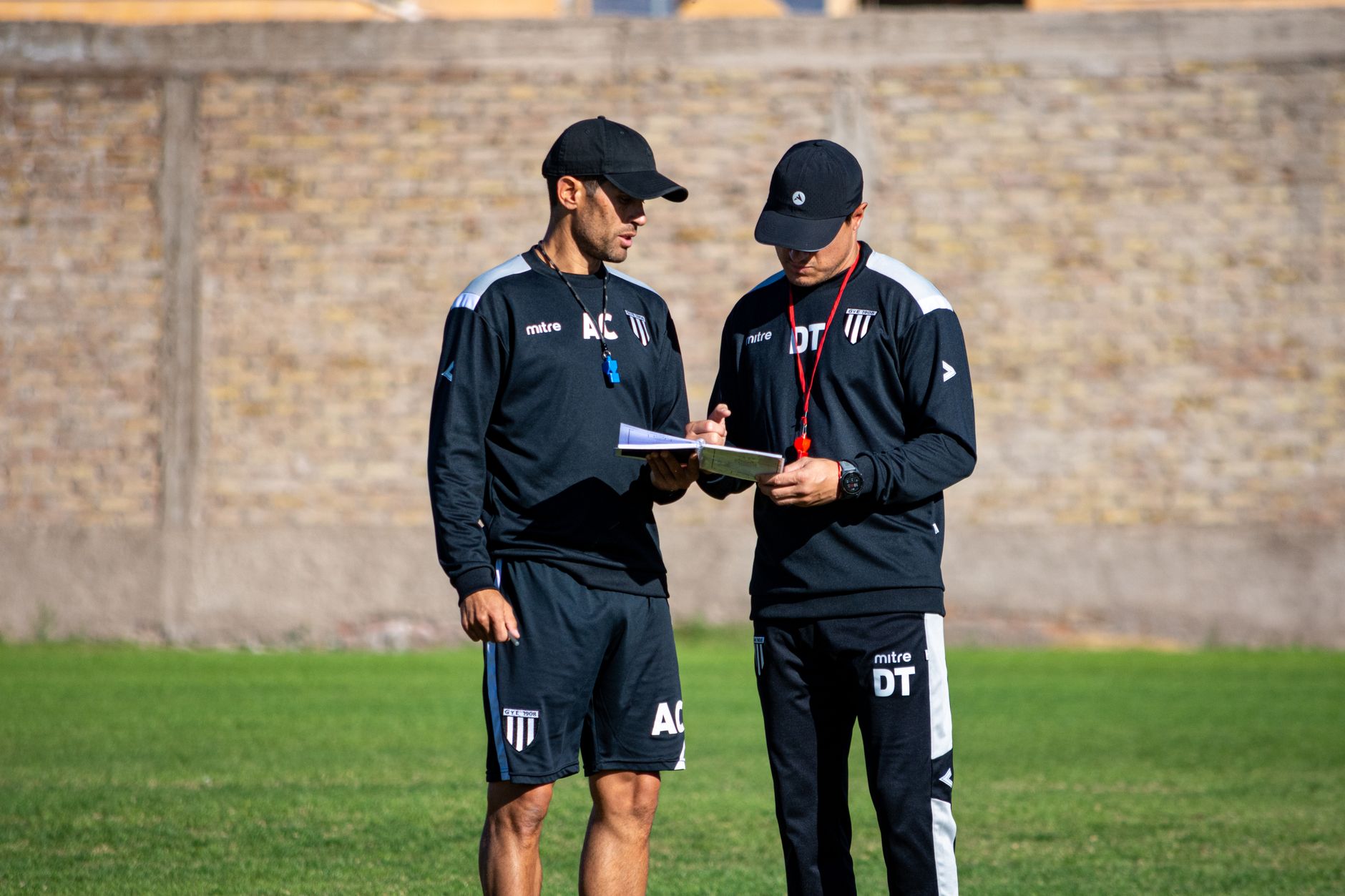
Photo by Franco Monsalvo on Pexels
My own test for formation failure is operational: after losing possession, count how many seconds the team takes to establish a compact defensive shape. If the first pressure arrives without cover, the team is vulnerable regardless of whether the lineup says 4-3-3 or 3-4-3. Over a match, repeated transition failures can outweigh a large possession advantage. This is why I track turnovers, high recoveries and shots conceded within 15 seconds of losing the ball.
A second information-gain point concerns substitutions. A formation may not fail until the first change. Replacing a disciplined winger with a direct attacker can remove defensive width; replacing a holding midfielder with a creative player can increase chance creation while reducing counter-press protection. For live match analysis, the substitution should be recorded as a structural event, not merely a personnel update.
To understand these details, consult our [Internal Link: guide to football pressing and transitions], then compare the team’s shape before and after possession changes. The goal is not to memorize labels. The goal is to identify where the next dangerous action is likely to occur.
Would I Use It Again?
Yes, I would use formation analysis again, but never as a standalone prediction method. My preferred hierarchy is clear: confirm the starting structure, identify the in-possession transformation, measure the defensive block, review player availability, then compare the tactical matchup. A formation is valuable because it reveals intended relationships; it is unreliable when treated as a fixed promise.
For the FIFA World Cup 2026, the schedule and tournament pressure make this method especially important. The competition will involve 48 teams, and the expanded format creates more matchups between established powers and less familiar opponents. National teams may use conservative structures early, then introduce more aggressive wing-back or pressing arrangements after halftime. The ability to react matters as much as the first-choice formation.
Here is my final ranking by practical use:
- 4-3-3: Best for width, pressing and controlled attacking numbers.
- 4-2-3-1: Best all-round structure for balance and transition security.
- 3-5-2: Best for central overloads and two-striker partnerships.
- 4-4-2: Best for compact defending and straightforward counterattacking.
- 3-4-3: Best for stretching a back four, but demanding on wing-backs.
- 5-4-1: Best for protecting a lead, but often weak in sustained possession.
This ranking is not a declaration that 4-3-3 wins every comparison. It reflects how easily each system provides repeatable roles across possession, pressing and defensive phases. A 5-4-1 can be the correct choice in the final 15 minutes, while a 4-4-2 may be ideal against a team whose full-backs advance too aggressively.
The practical recommendation is straightforward: before evaluating a match, write four labels beside each team—starting shape, attacking shape, defensive shape and transition risk. Then check the latest lineup news, injuries and player workload. For deeper preparation, use the [Internal Link: World Cup team tactics hub] alongside current player statistics, because the same diagram can produce entirely different outcomes with different personnel.

Photo by Vlad Vasnetsov on Pexels
One final caution is essential for readers interested in match predictions or gambling content. Tactical analysis can improve decision quality, but it cannot remove uncertainty. Refereeing decisions, injuries, set pieces, finishing variance and red cards can overwhelm a sound structural read. Set a fixed budget, avoid chasing losses and treat any prediction as a probability assessment rather than a promise of profit. Coach’s Corner is designed to improve understanding, not encourage reckless wagering.
If you want daily formation-led coverage before the 2026 World Cup, Coach’s Corner is the sensible next stop.
Frequently Asked Questions
Q: What is a football formation?
A: A football formation is the planned starting arrangement of a team’s 11 players across defence, midfield and attack. Common examples include 4-3-3, 4-2-3-1, 4-4-2 and 3-5-2, where the numbers normally describe player lines behind the goalkeeper. The formation changes during a match as full-backs advance, midfielders drop or forwards press. Therefore, the listed formation should be treated as a tactical reference point rather than a permanent picture.
Q: How do I identify a team’s real formation?
A: Identify the team’s shape in four phases: kick-off, build-up, defensive organisation and transition after losing possession. Watch the full-backs, the deepest midfielder and the distance between the front line and midfield rather than relying only on television graphics. Review at least the opening 10 minutes and the period after major substitutions, because teams often alter their structure during those moments. Recording these four phases produces a more accurate analysis than naming one formation.
Q: What is the difference between 4-3-3 and 4-2-3-1?
A: The 4-3-3 uses one holding midfielder and two advanced central midfielders, while the 4-2-3-1 uses two deeper midfielders and a number 10. The 4-3-3 usually creates more natural width and pressing angles, whereas the 4-2-3-1 generally offers stronger central protection. The better option depends on player roles, opponent pressure and whether the team wants a high press or safer transitions. Neither system is automatically more attacking in every match.
Q: Is 3-5-2 a good formation for counterattacking?
A: Yes, 3-5-2 can be excellent for counterattacking when its two strikers provide depth and the wing-backs recover quickly. The system can defend as a 5-3-2, win the ball centrally and release one of the forwards into the channels. Its main requirement is physical and tactical discipline from the wing-backs, because losing the ball with both players high can expose the flanks. Teams should also ensure that at least three players remain behind the ball during aggressive attacks.
Q: Why does a 4-4-2 sometimes fail against a 4-3-3?
A: A 4-4-2 can struggle against a 4-3-3 when its two central midfielders cannot control the opponent’s three-man midfield. The 4-3-3 may create a free player, circulate the ball around the front two and attack the space beside the 4-4-2’s central pair. The problem can be reduced if one forward drops into midfield, but that adjustment may weaken the counterattack. Compact distances and coordinated pressing are more important than the nominal numbers.
Q: Which football formation is best for beginners to understand?
A: The 4-4-2 is usually the easiest football formation for beginners because it has two clear defensive lines, two central midfielders, two wide players and two forwards. It illustrates width, compactness and basic defensive roles without requiring complex rotations. After understanding 4-4-2, beginners can compare it with 4-3-3 to see how an extra midfielder changes central control. This progression makes more advanced systems such as 3-4-3 easier to interpret.
Q: Can formation analysis improve match predictions?
A: Formation analysis can improve match predictions by revealing pressing vulnerabilities, midfield overloads and transition risks, but it cannot guarantee an outcome. Combine the tactical reading with injuries, recent performances, player workload, set-piece strength and home advantage. A practical method is to compare each team’s attacking shape with the opponent’s defensive shape, then assess whether the likely advantages create high-quality chances. Always use a fixed betting budget and never chase a losing position.