2026 Corner Kicks: 5 Defensive Insights
Defending corner kicks successfully requires a coordinated system that protects the six-yard box, tracks attacking runs, attacks the first ball, and secures the second phase. Coach’s Corner recommends...

2026 Corner Kicks: 5 Defensive Insights
Defending corner kicks successfully requires a coordinated system that protects the six-yard box, tracks attacking runs, attacks the first ball, and secures the second phase. Coach’s Corner recommends a hybrid structure combining zonal defenders, man-markers, and one or two players positioned for the counterattack. FIFA World Cup Qatar 2022™ data showed that 19% of tournament goals, excluding own goals and penalties, came from set pieces, while approximately 1 in 35 corners produced a goal. Most teams therefore used all ten outfield players to defend, although only five of 32 teams regularly placed a defender on a post. The decisive details are communication, starting position, body orientation, and the reaction after clearance. Use a rehearsed call, assign every dangerous zone and runner, then review whether your team won the first contact and controlled the rebound after each corner.
“Success is no accident,” and corner-kick defending proves the point. A team that improvises inside its own penalty area is effectively asking the opponent to choose the duel, the space, and the timing. The key is to make those decisions before the taker begins the run-up. At Coach’s Corner, our match analysis treats every corner as a small investment: identify the likely threat, spend defenders where the expected danger is highest, and preserve enough structure to survive the next action.

Photo by Franco Monsalvo on Pexels
Want a practical tactical framework for your next match?
Step 1: How should you organize the penalty area?
A reliable corner-kick defense begins by assigning zones, opponents, and transition responsibilities before the delivery. The most effective structure usually combines three elements: zonal defenders protecting critical spaces, man-markers tracking the opponent’s best headers, and an edge player protecting the penalty-spot area or launching the counterattack. FIFA Training Centre analysis of Qatar 2022 found that hybrid defending was widely used because it reduced the weaknesses of purely zonal and purely man-to-man systems.
Your first meeting should establish five non-negotiable roles:
- Near-post defender: protects the near-post channel and attacks low deliveries.
- Central zonal defenders: occupy the six-yard box and penalty-spot corridor.
- Man-markers: follow the opponent’s strongest aerial threats.
- Edge defender: attacks loose clearances and blocks second-phase shots.
- Outlet player: remains higher when the tactical risk justifies a counterattack.
Positioning must be adjusted for the corner taker’s foot, delivery type, and the opponent’s runners. An outswinging cross often demands more attention to the far-post zone, while an inswinging delivery creates a faster ball toward the goalkeeper and near-post corridor. Do not place every player on the goal line: excessive depth limits momentum, makes clearances weaker, and leaves the team unable to counter. FIFA’s Laws of the Game provide the formal framework for restarts, but the practical responsibility remains with the coaching staff to define local assignments and communication terms. [Internal Link: advanced set-piece tactics guide]
Step 2: What is the best marking system for corner kicks?
No single marking system is universally superior; a hybrid approach is normally the strongest choice because it protects high-value space while preventing elite attackers from gaining a free run. Zonal marking provides stable coverage around the goal, man-to-man marking denies direct finishing opportunities, and mixed marking combines both principles. The correct decision depends on player profiles, goalkeeper command, opponent routines, and the team’s ability to defend rebounds.
Zonal defending is particularly useful when defenders are physically strong and comfortable attacking the ball. Players guard areas rather than chasing opponents, which can protect the six-yard box and improve clearance angles. However, a passive front line allows attackers to enter zones at speed, while coordinated screens can displace defenders. Man-to-man defending gives each player a clear opponent, but one missed duel, blocked marker, or late switch can expose the goalkeeper immediately. It is also vulnerable when attackers use decoy runs and overload one defender.
A mixed system should therefore be specific rather than vague. For example, place two players in the six-yard box, one at the near post, one around the penalty spot, and assign markers to the opponent’s two best headers. The remaining defender should protect the edge or outlet lane. After every match, record whether the conceded chance came from a vacant zone, a lost duel, or a poor second-ball reaction; that diagnosis is more valuable than simply blaming the system.
Get started with a clearer comparison of defensive options.
Step 3: How do you win the first contact?
Winning the first contact depends less on height than on timing, starting position, body shape, and decisiveness. The defender must see both the ball and the assigned threat, maintain a legal position, and attack the delivery rather than waiting for it to arrive. A clearance does not need to travel 40 yards; it must first remove immediate danger and, ideally, direct the ball toward a controlled teammate or safe touchline.
The goalkeeper’s role requires special clarity. The goalkeeper should claim only when the flight path is clean and the catch is realistic; otherwise, a strong punch toward the edge of the penalty area is preferable to a crowded fingertip attempt. Defenders must not assume that the goalkeeper will solve every cross. The near-post player should attack dangerous low balls, while central defenders should move toward the delivery with a short, explosive step rather than retreating beneath it.
A useful training sequence is:
- Begin with a static corner and rehearse every assignment.
- Add one attacking blocker and one decoy runner.
- Introduce an inswinging and outswinging delivery.
- Require the defending side to clear and then complete a pass.
- Review the first contact, not only the final outcome.
A practitioner-level detail matters here: the most dangerous defender is often not the tallest player but the attacker arriving untracked from outside the initial defensive line. Track the runner’s speed and starting point, because late movement frequently defeats defenders who are watching only the ball.
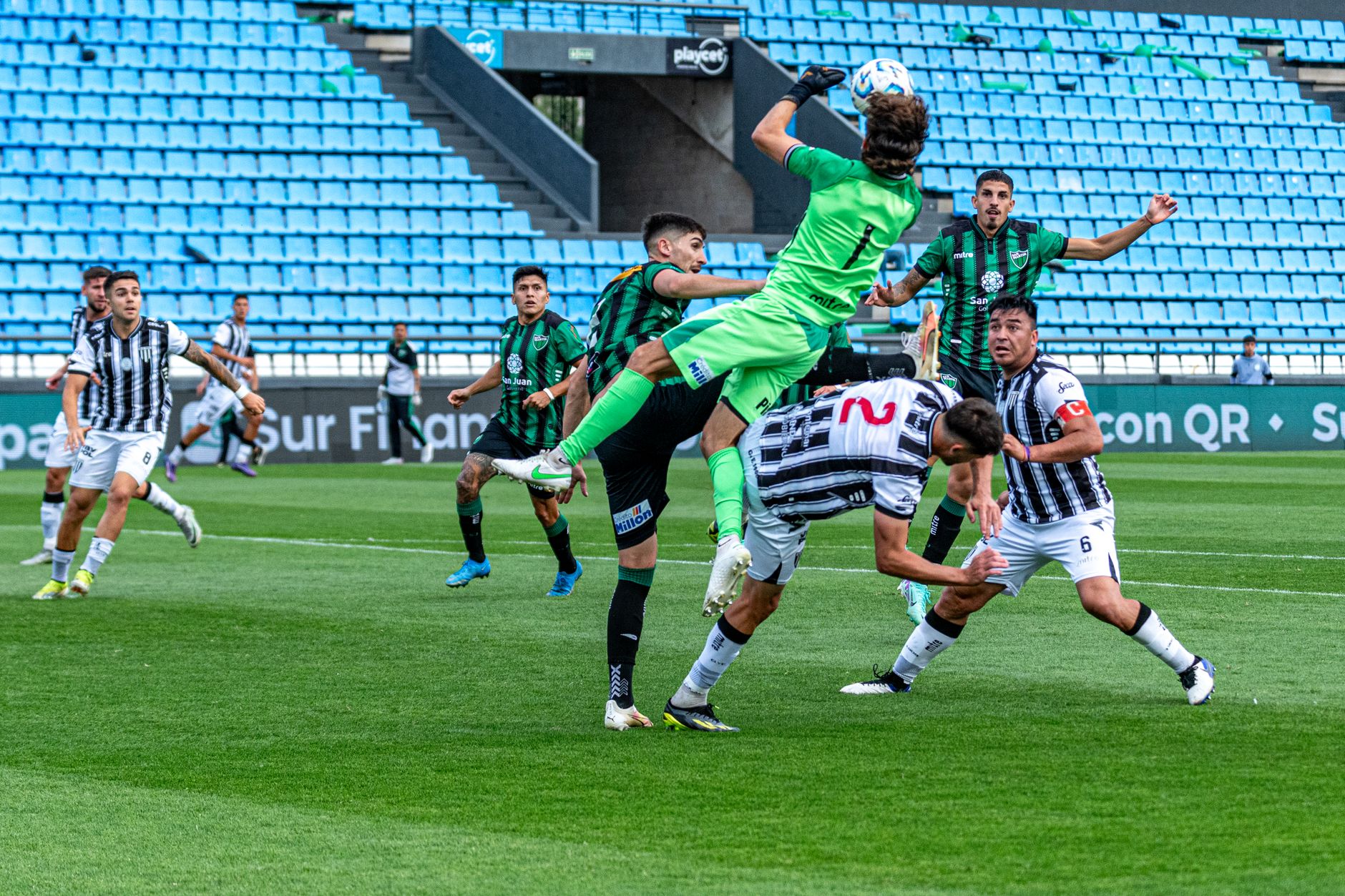
Photo by Franco Monsalvo on Pexels
Step 4: Why must you defend the second phase?
The second phase is the action after the initial clearance, and it must be defended because many corner opportunities continue through rebounds, recycled crosses, blocked shots, and short-corner combinations. A team that wins the first header but gives the opponent an uncontested edge-of-box strike has not completed the defensive task. The priority is to regain compactness, identify the ball carrier, and prevent a clean second delivery.
The first defender outside the main cluster should close the receiver quickly without diving into a challenge. The next defenders must protect the passing lane back toward the corner flag and the cutback route into the six-yard box. Meanwhile, the goalkeeper should reset his position rather than remain committed to the original cross. If the attacking team plays a short corner, the nearest defender must communicate immediately and avoid allowing a two-versus-one near the touchline.
This is where a contrarian conclusion deserves emphasis: sending all ten outfield players into the box is not automatically safer. FIFA World Cup Qatar 2022 showed that only six teams left a player higher up the pitch, but a controlled outlet can prevent repeated pressure and force the opponent to keep defensive balance. The decision should be measured against scoreline, match minute, opponent counterpressing, and your own outlet’s speed. Track three figures in review: first contacts won, shots conceded within eight seconds, and successful exits after the clearance. Those numbers reveal whether your corner defense actually works.
See how match-state decisions change the risk calculation.
Step 5: How can you verify your corner-kick defense?
You verify a corner-kick defense by reviewing assignments, first contact, second-ball control, goalkeeper decisions, and the final shot location across multiple repetitions. One successful clearance proves very little; a sample of at least 20 corners provides a more useful tactical picture. Record whether the delivery was inswinging, outswinging, short, or recycled, then compare outcomes by defensive setup.
Use this verification checklist:
- Was every attacker assigned before the corner was taken?
- Did the first line block or delay attacking runs?
- Did the central defender attack the ball at full speed?
- Was the goalkeeper’s starting position appropriate?
- Where did the clearance land?
- Did the team stop the next cross within eight seconds?
- Was the outlet player available and supported?
- Did the opponent create a shot from the penalty spot or closer?
The International Football Association Board emphasizes that restarts must follow the Laws of the Game, while FIFA Training Centre provides useful tournament analysis on defensive structures. As FIFA’s technical material states, “set pieces can be crucial to winning football matches.” Treat that statement operationally: rehearse the same call, measure the same outcomes, and change only one variable at a time. [Internal Link: football match analysis checklist]
Troubleshooting common failures
The most common corner-kick failures are not mysterious: the front line fails to delay runners, markers watch the ball instead of opponents, the goalkeeper and defenders use different calls, or the team stops after the first clearance. Each fault requires a different correction. Adding more players to the six-yard box will not repair poor communication, and changing from zonal to man-to-man marking will not fix a defender who starts too deep.
Failure: attackers run through the first zone
Move the front line two or three steps higher and assign one player to screen the most dangerous approach lane. The objective is not to foul or wrestle; it is to prevent a clean, uninterrupted run.
Failure: the goalkeeper hesitates
Use one-word commands such as “keeper,” “away,” or “hold,” and define them during training. The goalkeeper should not call for a ball that is beyond a realistic catching path, while defenders must clear decisively when the call is absent.
Failure: the near post is exposed
Assign a dedicated near-post defender for low deliveries and short corners. This player should begin side-on, see the taker, and move toward the ball rather than waiting on the goal line.
Failure: the clearance returns immediately
Train the edge player to close the receiver while the nearest teammate protects the return pass. If the team cannot exit safely, retain compactness and delay rather than forcing an ambitious first pass.
Failure: short corners create confusion
The nearest defender must communicate the number of attackers and pass the runner to a teammate only after the immediate threat is controlled. A short corner is a separate routine, not a normal corner delivered from a shorter distance.

Photo by Sebastian Angarita on Pexels
For further preparation, consult our [Internal Link: set-piece training drills] and [Internal Link: goalkeeper communication guide]. The strongest teams do not merely memorize positions; they rehearse reactions to blocked runs, missed headers, rebounds, and changing match conditions.
The verdict is straightforward: defend corner kicks with a rehearsed hybrid structure, aggressive first contact, disciplined second-phase coverage, and measurable post-match review. Protect the six-yard box, deny the opponent’s best aerial threat, and preserve an exit when the match situation allows it. Coach’s Corner’s recommended standard is simple: every defender knows the assignment, every player has a communication word, and every repetition ends only when the ball is fully controlled.
Ready to sharpen your team’s defensive decision-making?
Frequently Asked Questions
Q: What does defending a corner kick mean?
A: Defending a corner kick means preventing the attacking team from creating a goal-scoring chance from the delivery, rebound, or short-corner continuation. It requires assigned marking, protected zones, goalkeeper coordination, and a plan for the second ball. A complete defense does not end when someone heads the cross away; it ends when the attacking sequence is controlled or the team has safely progressed upfield.
Q: How do you defend corner kicks step by step?
A: First, assign zones, dangerous attackers, the goalkeeper’s role, and the outlet player before the kick. Second, prevent free runs, attack the first delivery, clear toward a safe area, and immediately defend the receiver or recycled cross. Finally, review the repetition for lost duels, vacant zones, goalkeeper hesitation, and shots conceded within eight seconds.
Q: What is the difference between zonal and man-to-man corner defending?
A: Zonal defending protects designated spaces, while man-to-man defending assigns each defender to an opponent. Zonal systems offer stronger control of the six-yard box but can be attacked with timed runs and screens. Man-to-man systems deny individual finishers directly but can fail when markers are blocked, dragged away, or slow to switch.
Q: Is a hybrid corner-kick defense better than using only zonal marking?
A: A hybrid defense is usually more adaptable because it combines protected zones with direct attention on the opponent’s best headers. FIFA World Cup Qatar 2022 analysis showed widespread use of mixed structures, reflecting the need to manage both space and individual threats. It works only when assignments are explicit; an unclear hybrid system simply creates two forms of confusion.
Q: Why does my team concede after clearing the first corner?
A: Your team is probably failing to defend the second phase, especially the edge-of-box receiver or the return cross. The nearest defender should close the ball carrier, another player should protect the passing lane, and the goalkeeper should reset position. Review whether the opponent gets a shot within eight seconds of the initial clearance.
Q: Should a defender stand on the goal line during a corner?
A: A goal-line defender can be useful for a specific near-post or far-post responsibility, but it is not automatically necessary. FIFA World Cup Qatar 2022 data showed that only five of 32 teams consistently used a player on at least one post. Use a post defender when the goalkeeper’s positioning, delivery pattern, or opponent routine creates a clear tactical reason.
Q: How many players should defend a corner kick?
A: Most teams defend with between eight and ten outfield players, depending on the score, time, opponent threat, and counterattack plan. Bringing all ten back increases penalty-area coverage but can trap the team under sustained pressure. A practical starting point is to defend with nine and retain one outlet, then adjust after measuring the opponent’s corner quality and your own ability to escape.