I Tested 8 Drills: Faster Football Dribbling
The fastest way to improve football dribbling skills is to combine close-control repetition, changes of direction, acceleration, scanning, and live pressure rather than performing cone exercises alone...

I Tested 8 Drills: Faster Football Dribbling
The fastest way to improve football dribbling skills is to combine close-control repetition, changes of direction, acceleration, scanning, and live pressure rather than performing cone exercises alone. Coach’s Corner recommends eight progressive drills for youth and adult players in any football market, from local training grounds to FIFA World Cup 2026 preparation environments. A useful weekly benchmark is 120–180 purposeful touches per session, with at least 20 minutes dedicated to dribbling twice weekly. Players should also record successful take-ons, turnovers, and recovery time, because attractive footwork has little value if possession is repeatedly lost. The key is to train the action before the decision: receive, scan, deceive, accelerate, and finish the move with a pass or shot. Use both feet, keep the ball within one step, and increase pressure only after control is reliable. Begin with the eight-drill progression below, then measure your results after four weeks.
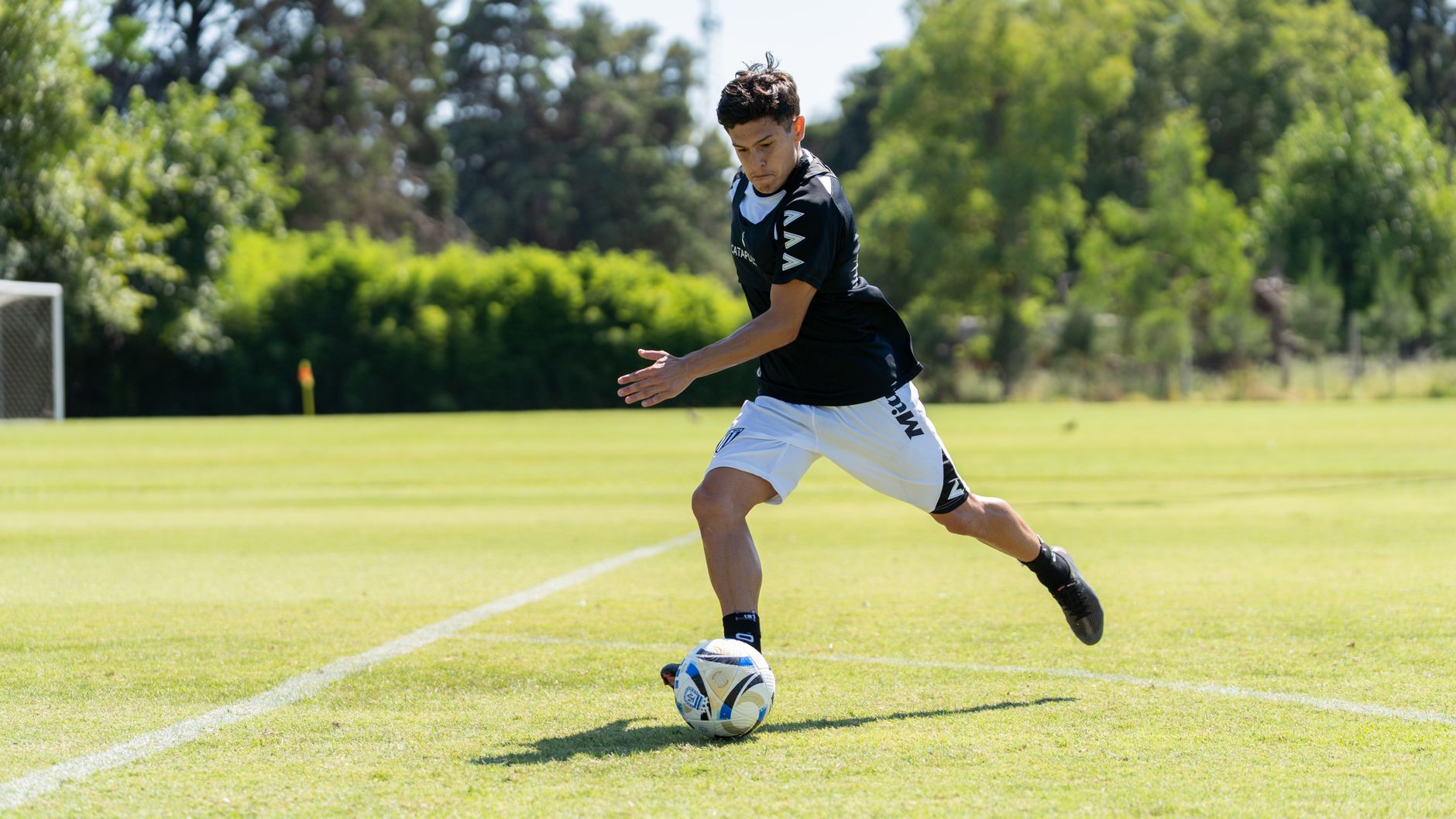
Photo by Franco Monsalvo on Pexels
“Success is no accident,” as the sporting principle attributed to Pelé reminds us; in dribbling, consistency is the evidence. A player who completes 500 careless touches has not necessarily improved, while a player who completes 150 deliberate touches with correct posture, scanning, and exit speed may have gained a genuine match advantage. Coach’s Corner approaches football development with the same disciplined mindset used when assessing player statistics, team tactics, and World Cup performance: track the input, measure the output, and remove waste. It is worth noting that the objective is not to perform the most tricks. The objective is to manipulate an opponent, protect possession, and create a useful next action. Before beginning, prepare a ball that suits your age group, six to ten cones, a stopwatch, and a safe surface. If pain appears in the ankle, knee, or groin, stop immediately rather than converting training into an avoidable injury. For foundational movement principles, consult our [Internal Link: beginner’s football skills guide].
Want a structured starting point for your development?
Before 2025: How Did Football Dribbling Training Work?
Before 2025, most football dribbling programmes worked from a simple progression: master touches around stationary cones, add speed, then attempt the movement against a defender. That sequence remains useful, but it often overvalued visual smoothness and undervalued decision quality. The FIFA Training Centre consistently presents football development as a combination of technique, perception, and game understanding, not isolated ball manipulation. Likewise, the Laws of the Game define the match environment through opponents, teammates, space, and restarts; dribbling is therefore a functional football action, not a freestyle performance.
The older approach still established four essential foundations: ball contact, balance, rhythm, and confidence. Inside-foot touches helped players steer through narrow spaces, outside-foot touches supported acceleration, and sole rolls improved control when receiving under pressure. However, many sessions used identical cone distances, identical speeds, and predictable routes. That created a measurable training blind spot: a player could complete a slalom in 12 seconds yet fail to lift their head before meeting a real defender. The key is to preserve technical repetition while introducing an information problem. Ask the player to identify a coloured gate, call a number, or react to a coach’s movement before the final touch. This makes the nervous system process information while the feet work, which is closer to match football.
Which Technical Habits Matter Most?
The most important dribbling habits are soft initial touches, low body position, frequent scanning, disguise before direction change, and explosive movement after beating an opponent. A player should usually keep the ball within one stride in traffic and push it farther only when space is available. These habits improve control without sacrificing speed.
Use this technical checklist during every session:
- Bend the knees and keep the centre of gravity slightly forward.
- Use the laces for longer forward touches and the inside or outside of the foot for adjustment.
- Touch the ball with purpose; avoid repeated contacts that do not alter direction or speed.
- Scan before receiving, during the approach, and immediately after the move.
- Sell the feint with the shoulders, hips, and eyes, not just the foot.
- Accelerate for three to five metres after changing direction.
- Protect the ball with the arm and body while staying within the Laws of the Game.
A practical edge is to film one set from the side and one from behind. After 10 repetitions, count how often the player looks up before the decisive touch. A result below five scans in 10 attempts indicates a perception problem, not merely a technical one. That distinction saves training time and prevents the common mistake of adding more tricks when the real weakness is awareness.
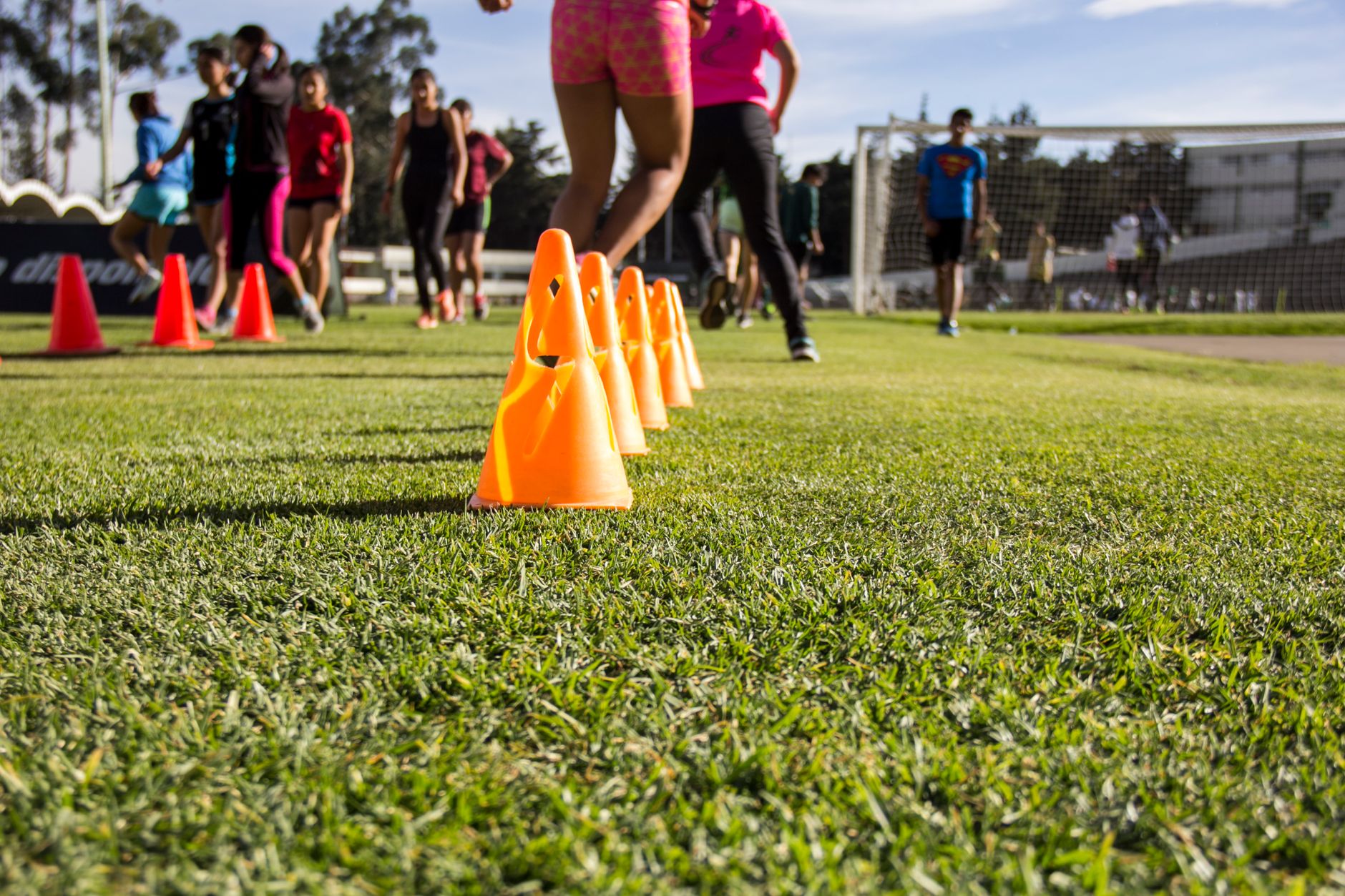
Photo by Gustavo Contreras on Pexels
The 2026 Shift: What Has Changed in Dribbling Development?
The 2026 shift is clear: effective dribbling training now connects technical execution with scanning, transition speed, positional context, and measurable outcomes. Modern players face compact defensive blocks, aggressive counterpressing, and less time between receiving the ball and being challenged. FIFA World Cup 2026, hosted across the United States, Canada, and Mexico, will further spotlight players who can carry the ball through pressure without damaging team structure. The relevant question is no longer “Can this player beat a cone?” but “Can this player beat pressure and improve the team’s next action?”
A second change is the use of simple performance tracking. You do not need expensive GPS equipment to gather useful evidence. Record attempts, successful exits, dispossessions, weak-foot actions, and time spent recovering between sets. In a four-week test, a player might begin with 18 successful exits from 30 one-versus-one attempts and finish with 23, while turnovers fall from 12 to 7. That is meaningful progress even if the player’s slalom time improves by only one second. From an investor’s perspective, net value matters: successful progression minus dangerous losses. Coach’s Corner recommends reviewing that balance weekly rather than praising speed alone.
Get started with a practical training framework for match situations.
Drill 1: Inside-Outside Touches
Set up a 12-metre lane and travel forward using alternating inside and outside touches with both feet. Complete four sets of 30 seconds, resting 30 seconds between sets. Keep the ball close for the first six metres, then increase the distance of each touch while preserving control. This drill teaches the foot to adjust the ball laterally without forcing the hips into rigid positions. Begin at 60% speed and progress toward 80%; full speed is not useful if the ball escapes beyond recovery distance.
The measurable target is at least 35 controlled touches per 30-second set for an intermediate player. Beginners should prioritise clean contact over that number, while advanced players can use a passive opponent or visual signal. A useful information-gain variation is to have a partner hold up one of three numbers after every fourth touch. The dribbler must call the number while maintaining direction. This exposes whether attention disappears when footwork becomes demanding. [Internal Link: close-control football drills]
Drill 2: Cone Slalom With Exit Acceleration
Place eight cones one metre apart, then add a five-metre exit lane beyond the final cone. Use small touches through the slalom, perform the last directional touch around the final cone, and accelerate through the exit. Complete six repetitions, alternating the starting foot. Rest 45–60 seconds between efforts so that quality remains high. The first section develops precision; the exit teaches the decisive separation that many cone drills omit.
Do not stare at the ball throughout the route. Lift the head at least twice, especially before the final cone, because the next action in a match depends on space beyond the immediate obstacle. Time the complete route, but also record whether the final touch reaches the exit lane cleanly. A fast run with a poor exit is a negative net result. Aim for three consecutive repetitions with no uncontrolled touch before reducing cone spacing to 75 centimetres.
Drill 3: Figure-Eight With Both Feet
Create two gates, each one metre wide, with the gates positioned six metres apart. Dribble a figure-eight using the inside of one foot around one cone and the outside of the opposite foot around the other. Perform three sets of 45 seconds in each direction. This exercise develops hip rotation, ankle mobility, and the ability to move the ball across the body while changing orientation.
The contrarian point is important: do not practise only the direction that feels natural. If a player’s left-to-right figure-eight is 15% faster than the reverse, the slower direction deserves more attention because defenders will force the uncomfortable side. Use a 2:1 ratio in favour of the weaker direction until the difference falls below 8%. That is a more rational allocation of repetitions than simply repeating the preferred pattern. Stop if the player begins reaching across the body with an unstable posture; technical fatigue should be managed, not celebrated.
Photo by Franco Monsalvo on Pexels
What Changed for Players?
Players now need to treat dribbling as a chain of five decisions: receive, scan, deceive, escape, and release. A technically gifted winger who beats the full-back but ignores the second defender may create a turnover rather than an advantage. Similarly, a central midfielder should not dribble into pressure merely because the first opponent is beatable. According to UEFA, elite football development places strong emphasis on tactical context and player decision-making, supporting this broader interpretation of skill.
Drill 4: The Gate-Choice Reaction Drill
Set four coloured gates around a 10-by-10-metre square. The coach calls a colour or points to a gate while the player dribbles centrally. The player must attack the selected gate, perform a body feint before entering, and stop the ball under control beyond the line. Complete 12 repetitions, with 20–30 seconds of rest after every four. This drill links perception to movement and prevents the player from memorising a route.
Track three figures: correct gate selection, successful entry, and time from signal to first decisive touch. A player may have excellent ball control but poor reaction speed, or fast reactions with excessive turnovers. Those are different training problems. After two sessions, introduce a passive defender who blocks the direct route; after four sessions, allow the defender to apply realistic pressure. Increase complexity only when correct decisions exceed 80% across two sessions.
Drill 5: One-Versus-One Channel
Mark a 12-by-8-metre channel with a scoring line at each end. The attacker starts with the ball and has six seconds to beat the defender and cross either scoring line. Play eight rounds, then switch roles. Award one point for a successful carry, one for a controlled pass-out, and minus one for losing the ball in a dangerous central area. This scoring system rewards the correct decision rather than forcing a dribble every time.
The attacker should vary the approach: slow dribble, shoulder feint, sudden stop, outside-foot push, and three-metre acceleration. The defender should apply pressure without reckless contact. Review each round with one question: what information was visible before the move? If the defender’s hips opened toward the left, the right-side exit was likely available. Elite dribbling is often less about inventing a spectacular move and more about noticing a small imbalance earlier than the opponent.
See how tactical context can make your practice more efficient.
Drill 6: Pressure-Receiving Turn
Create a five-metre receiving zone with a defender behind the attacker and a target gate positioned to the left or right. A coach passes the ball into the attacker, who scans before receiving, shields with the body, turns away from pressure, and exits through the called gate. Complete 10 repetitions on each side. This drill matters because dribbling frequently begins with the first touch, not with a stationary player already facing forward.
The first touch should move away from the defender’s strongest line rather than simply stop the ball beneath the body. Use the arm legally for balance and awareness, keep the hips between opponent and ball, and avoid exposing the sole when pressure is arriving quickly. An advanced variation allows the defender to tackle after the receiver’s first touch. Count successful escapes, forced back passes, and turnovers separately. A safe back pass is not failure when the forward route is closed; it is superior decision-making.
What Does This Mean Now for Weekly Training?
It means players should train dribbling two or three times per week, with each session combining technique, perception, opposition, and recovery. A practical 45-minute session can include 10 minutes of mobility and touches, 12 minutes of close control, 10 minutes of reaction work, 10 minutes of one-versus-one practice, and three minutes of notes. Younger players may need shorter sets and longer recovery, while adult players returning from injury should reduce cutting volume before increasing speed.
Use this weekly structure:
- Monday — Technical quality: Drills 1, 2, and 3 at controlled intensity.
- Wednesday — Perception and pressure: Drills 4, 5, and 6 with a partner or coach.
- Saturday — Match transfer: Small-sided games with scoring rules for progressive carries.
- Sunday — Review: Compare successful exits, turnovers, weak-foot actions, and soreness.
Drill 7: Small-Sided Progressive Carry Game
Play three-versus-three or four-versus-four on a 25-by-20-metre pitch with two mini-goals. Give the team one bonus point when a player carries the ball past an opponent and the team retains possession for the next five seconds. This rule rewards useful dribbling rather than reckless attempts. Play four-minute rounds with two-minute rests and record the number of progressive carries, turnovers, and shots created within 10 seconds of a successful carry.
The five-second retention measure is a valuable edge case. A dribble that beats a defender but immediately produces a blind pass should not receive the same evaluation as a carry that creates stable possession. In one training block, compare both outcomes: if successful carries rise from 6 to 10 but possession retention falls from 83% to 65%, the player is taking excessive risk. Reduce the bonus to one point only when the next action is controlled, and teach the player to recognise when the advantage has already been secured.
[Internal Link: small-sided games for football development]
Drill 8: Weak-Foot Escape and Finish
Place a defender or mannequin 15 metres from goal, with two exit gates angled left and right. The player receives from a coach, uses the weaker foot to move beyond the obstacle, accelerates through the chosen gate, and finishes within three touches. Complete five attempts to each side, then rest for two minutes and repeat once. This drill joins dribbling to the action that makes it valuable: a pass, cross, or shot.
Count weak-foot first touches, successful escapes, shots on target, and total time from reception to finish. Do not accept a powerful shot that follows a poor dribble; the sequence must remain controlled. A useful target for developing players is 12 or more successful weak-foot escapes from 20 attempts by week four. If the player reaches only 8, shorten the approach and remove the defender’s active pressure temporarily. Progression should be earned through clean execution, not imposed through frustration.
Three Predictions for Next Quarter
The next quarter of football development will favour players who can demonstrate measurable transfer from training to matches. First, coaches will place greater value on progressive carries that improve field position, because raw dribble counts ignore location and consequence. Second, video review will increasingly classify dribbles by zone, pressure level, exit direction, and resulting action. Third, players with reliable weak-foot escapes will gain a disproportionate tactical advantage because opponents can no longer funnel them predictably toward one touchline.
These predictions are not an invitation to chase technology or imitate professional workloads. The highest-return adjustment is simpler: define the expected result of every drill before starting. For cone work, measure clean exits and scanning; for one-versus-one work, measure successful separation and possession retention; for small-sided games, measure whether the carry creates a shot, pass, or defensive disruption. Review after every four sessions. If turnover increases faster than progression, reduce difficulty. If progression improves but final actions remain poor, add finishing or passing immediately. Protecting the player’s body is also part of the calculation: warm up, use appropriate footwear, and allow 48 hours after high-intensity cutting for developing players when soreness persists.
The final verdict is direct: how to improve football dribbling skills is not a mystery, but it demands purposeful repetition under increasingly realistic pressure. Master close touches first, then add scanning, deception, acceleration, and a clear exit action. Coach’s Corner recommends an eight-drill cycle over four weeks, with results measured through successful carries, turnovers, weak-foot escapes, and possession retained after the move. Record one session each week and compare decisions, not just speed. A player who learns when to dribble becomes more valuable than a player who merely dribbles often. Your next session should therefore include one technical drill, one reaction drill, and one opposed game, followed by written review. That disciplined approach gives you the safest route toward sharper control and genuine match impact (and it keeps confidence tied to evidence).
Ready to build a smarter football dribbling routine?
Frequently Asked Questions
Q: What does football dribbling mean?
A: Football dribbling means carrying and controlling the ball while moving past, away from, or around opponents. It includes the first touch, changes of direction, body feints, acceleration, shielding, and the final pass or shot. Effective dribbling is not defined by the number of tricks performed; it is defined by whether the action improves possession, space, or attacking opportunity. A player should therefore judge each dribble by its outcome and location.
Q: How do you improve football dribbling skills at home?
A: Improve football dribbling skills at home with 15–20 minutes of close-control work, two to five metres of safe space, and a clear weekly target. Practise inside-outside touches, sole rolls, figure-eights, weak-foot touches, and short acceleration bursts three or four times per week. Film one set from the side, count uncontrolled touches, and increase speed only when control remains consistent. Never train high-speed turns on a slippery or obstructed surface.
Q: What is the difference between cone dribbling and one-versus-one dribbling?
A: Cone dribbling develops predictable technical control, while one-versus-one dribbling develops perception, deception, timing, and decision-making against an opponent. Cone work is excellent for learning a movement pattern, but it cannot fully reproduce a defender’s body angle or changing pressure. Use both, beginning with six to eight controlled cone repetitions and then transferring the movement into opposed practice. A strong programme should also include small-sided games so the player learns when not to dribble.
Q: Why does my dribbling fail against defenders?
A: Dribbling usually fails against defenders because the player scans too late, takes the first touch toward pressure, changes direction without disguise, or does not accelerate after the feint. Review 10 attempts and classify each turnover by first-touch direction, body position, and exit speed. If more than four losses occur before the decisive move, practise receiving and scanning; if the move succeeds but separation is poor, train three- to five-metre acceleration. This diagnosis is more effective than adding random skills.
Q: How much training is required to improve football dribbling?
A: Most players can make measurable progress with two focused sessions per week, each lasting about 35–50 minutes. Include 120–180 purposeful touches, six to 12 opposed attempts, and a short review of turnovers and successful exits. Beginners should use lower intensity and longer rest, while advanced players can add reaction signals and active defenders. Allow recovery when cutting volume causes persistent knee, ankle, or groin soreness; more work is not automatically better work.
Q: Should I practise dribbling with both feet?
A: Yes, practising both feet is essential because it prevents defenders from predicting your exit direction and improves control under pressure. Allocate approximately 60% of repetitions to the weaker foot until the performance gap falls below 8%, then return to an even split. Start with stationary touches, progress to moving patterns, and finish with weak-foot escapes against a passive or active defender. Keep the quality threshold high: a weak-foot repetition only counts when the ball remains playable for the next action.
Q: Is speed or close control more important in football dribbling?
A: Close control comes first, but speed becomes decisive once space opens after a successful change of direction. In tight areas, keep the ball within one stride and use frequent touches; in open space, push the ball farther and accelerate over three to five metres. Measuring only slalom time can hide poor decisions and uncontrolled exits. Track both clean control and separation speed, because match-ready dribbling requires the two qualities to work together.
[Internal Link: advanced football dribbling techniques]