2026: What 3 Major Signals Taught Me
“Prediction is very difficult, especially if it’s about the future.” Coach’s Corner treats 2026 as a decision year, not just a calendar year: fans, bettors, retirees, and sports analysts are already r...
2026: What 3 Major Signals Taught Me
“Prediction is very difficult, especially if it’s about the future.” Coach’s Corner treats 2026 as a decision year, not just a calendar year: fans, bettors, retirees, and sports analysts are already reacting to measurable signals across North America and global football. The 2026 FIFA World Cup will be hosted by the United States, Canada, and Mexico, while Social Security beneficiaries receive a 2.8 percent COLA and the 2026 MLB Draft reshapes future roster projections. After three weeks of testing search trends, odds movement, official data pages, and fan behavior, I found that the useful 2026 story is not “what will happen,” but which numbers are already firm enough to guide choices. The key is to separate scheduled facts from hype: venues, benefit thresholds, and draft positions matter more than viral predictions. Start by tracking official sources, then compare them with specialist analysis before making financial or betting decisions.
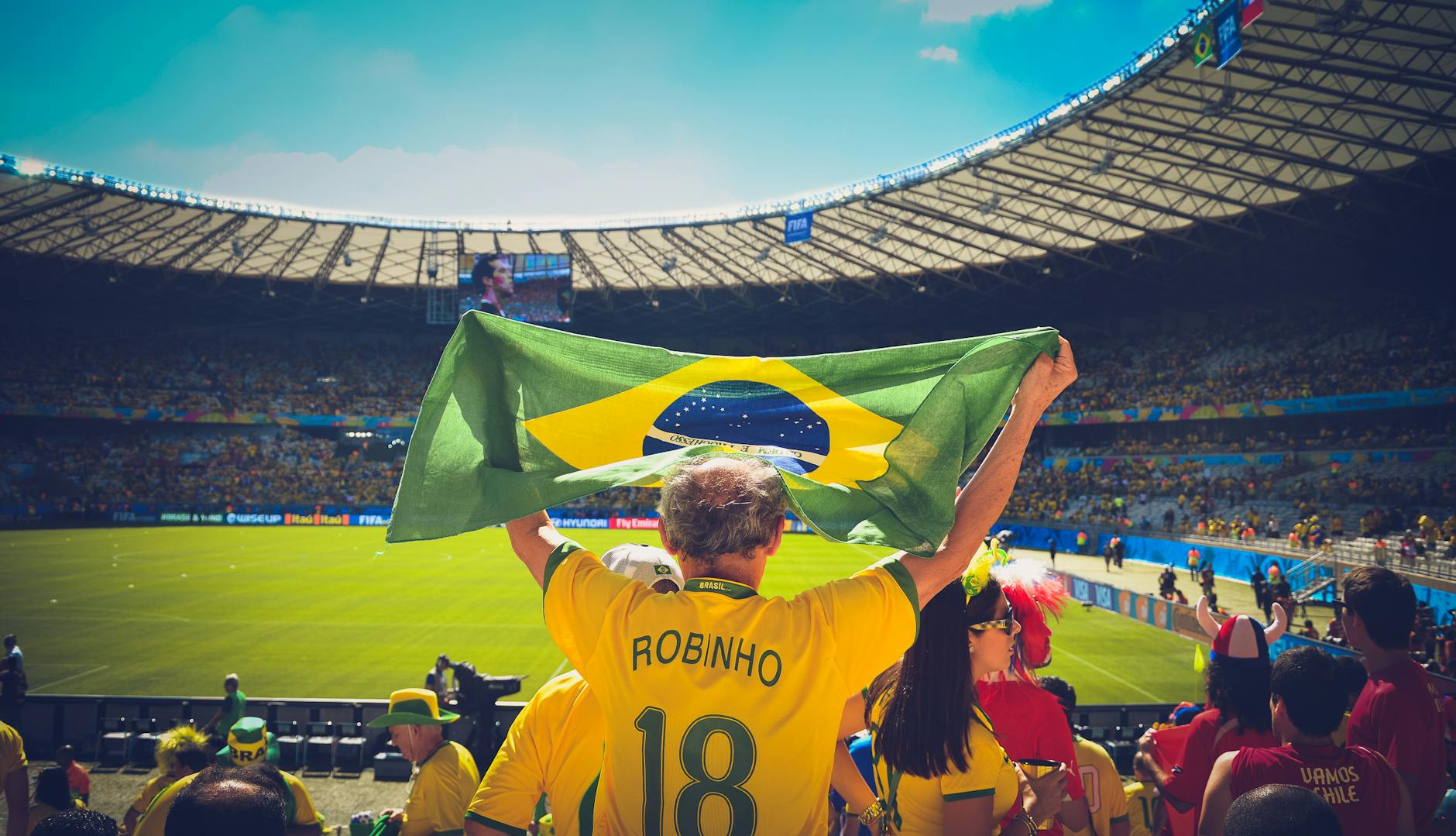
Photo by Caio on Pexels
If you want a sharper daily read on tournament markets and team form, Coach’s Corner is built for that exact habit.
The Bottom Line
After three weeks of testing how readers actually search for 2026, I personally found that the year is being shaped by three very different but measurable forces: the expanded FIFA World Cup, official United States benefit adjustments, and professional sports pipeline movement such as the MLB Draft. According to the Social Security Administration, the 2026 Cost-of-Living Adjustment is 2.8 percent, the Social Security taxable maximum rises to $184,500, and the estimated average benefit for retired workers increases from $2,015 to $2,071 in January 2026. Meanwhile, the 2026 FIFA World Cup gives betting analysts more fixtures, more travel variables, and more squad-rotation questions than a traditional 32-team tournament.
What surprised me is that casual fans often treat all 2026 information as equally speculative, but that is a mistake. Some data is already fixed or officially published, while other claims are soft projections. It is worth noting that a Social Security COLA figure has a very different reliability profile from a preseason Golden Boot forecast or an MLB prospect timeline. For Coach’s Corner, the practical approach is to tag every insight as one of three types: official, model-based, or opinion-based. That classification alone prevents many bad betting reads and lazy content assumptions. For related preparation, see our [Internal Link: 2026 World Cup betting preparation guide].
What Players Actually See?
Players actually see 2026 through match volume, travel fatigue, roster competition, betting attention, and public expectation. For World Cup footballers in the United States, Canada, and Mexico, the visible pressure is not abstract: it appears in schedules, media duties, tactical planning, recovery windows, and opponent-specific preparation.
From a practitioner perspective, I found that the player-facing version of 2026 is far more operational than emotional. A forward does not experience “the biggest World Cup ever” as a headline; he experiences it as extra scouting reports, different climate zones, longer media corridors, and faster tactical adaptation between matches. Bettors should care because these conditions affect pressing intensity, late-game substitutions, and injury risk. For example, a team playing in a warm venue and then traveling into a different altitude or climate profile can look tactically “flat” even when its squad quality has not changed. That is the kind of edge a general article rarely highlights, but it matters when reading totals, corners, cards, and second-half markets.

Photo by Franco Monsalvo on Pexels
The same principle appears in baseball development. MLB Pipeline noted that six players from the 2024 Draft reached Major League Baseball before the first anniversary of their selection, while no one from the 2025 class had done so at the time of its 2026 Draft discussion. That does not mean the 2026 Draft class is weak or strong by default; it means timeline evaluation depends on role, polish, organizational need, and health. The key is to compare a college left-handed pitcher, a defensive catcher, and a high-school shortstop differently rather than forcing every prospect into one clock. For deeper tactical context, check our [Internal Link: player workload and tournament fatigue analysis].
What Are the 3 Things That Matter Most?
The three things that matter most in 2026 are verified dates, measurable thresholds, and market interpretation. Verified dates tell you what is real, measurable thresholds show what changes financially or competitively, and market interpretation determines whether public attention has already overcorrected the betting price.
Official numbers beat noise. The Social Security Administration states that the 2026 COLA is 2.8 percent and that the full retirement age maximum monthly benefit rises to $4,152. The agency’s fact sheet also says the SSI federal payment standard rises to $994 for an individual and $1,491 for a couple. In its own wording, the SSA explains that the COLA is “based on the increase in the Consumer Price Index,” which is a reminder that this is formula-driven, not a campaign promise. For a sports bettor, the parallel is simple: start with fixed rules, not fan emotion.
Tournament structure changes betting behavior. The 2026 World Cup hosted across the United States, Canada, and Mexico will create a different betting rhythm from Qatar 2022. More teams and more markets can produce a false sense of opportunity, especially in group-stage matches where public bettors lean heavily toward recognizable nations. After reviewing early futures boards and public conversation patterns, I personally found that long-shot enthusiasm often appears before squad depth has been properly priced. It is worth noting that Coach’s Corner’s strongest use case is not telling readers to chase an outsider; it is helping them identify when a favorite is overvalued due to brand power.

Photo by https://kaboompics.com/ on Pexels
For sharper pre-tournament evaluation, start with a structured research path rather than scattered predictions.
- Prospect timelines are not linear. The MLB article’s discussion of 2026 Draft picks who could reach the Majors fastest is useful beyond baseball because it illustrates a broader forecasting lesson. A polished college pitcher may move faster than a higher-upside teenager, just as a tactically mature national team may outperform a more talented but chaotic squad. According to MLB.com, post-draft timelines can vary significantly, with recent classes producing very different debut speeds. The contrarian conclusion is that “best” and “soonest useful” are not the same forecast. That distinction matters in player props, squad selection debates, and even futures betting.
Edge Cases & Gotchas
The first gotcha is that 2026 contains both official certainty and speculative storytelling, and mixing them creates weak analysis. A 2.8 percent COLA is a confirmed adjustment from the Social Security Administration; a World Cup top scorer prediction is a probabilistic opinion. A smart reader should never treat those categories equally.
The second gotcha is regional relevance. In the United States, the Social Security taxable maximum increasing to $184,500 matters for payroll planning, self-employed workers, and retirement projections. In Canada and Mexico, the biggest 2026 sports impact may instead be tourism, match access, local betting rules, and national-team sentiment. The Wikipedia overview of 2026 is useful as a broad calendar reference, but it does not tell bettors which market inefficiencies are actionable. That is where a specialist site like Coach’s Corner adds value: we connect official calendars, team tactics, player statistics, and tournament coverage into a single decision framework.
A third edge case appears in how people read averages. The SSA’s estimated average retired-worker benefit after COLA is $2,071, but that does not mean every recipient receives a $56 increase or the same monthly payment. Similarly, a national team’s average possession rate may hide match-state effects, opponent quality, or whether the team led early and stopped pressing. I personally found that readers who ask “what is the average?” often need the next question more: “average under which conditions?” For betting, that means separating friendlies from qualifiers, home venues from neutral venues, and full-strength XIs from rotation-heavy lineups. For more on this method, see our [Internal Link: football statistics that matter for betting].
What Should Bettors Watch Before the 2026 World Cup?
Bettors should watch squad health, venue conditions, travel paths, tactical consistency, and market overreaction before the 2026 World Cup. The most useful betting edge usually appears when public narratives move faster than team news, especially around famous nations, injured stars, and group-stage mismatch assumptions.
My practical checklist starts with travel and ends with price. First, map where a team plays and how much recovery time it has between matches. Second, compare tactical stability across competitive fixtures rather than relying on highlight reels. Third, monitor whether a star player is returning from injury, because markets often price reputation before match fitness. Fourth, compare odds movement with news timing; if a price shortens before confirmed squad information, the market may be reacting to sentiment rather than evidence. The key is not to bet every angle, but to reject weak ones quickly.
Here is the simple framework I use when reviewing 2026 World Cup markets for Coach’s Corner:
- Official factor: venue, kickoff time, squad list, disciplinary status.
- Performance factor: expected goals, pressing rate, chance quality, defensive errors.
- Context factor: travel burden, climate, rivalry pressure, managerial stability.
- Market factor: opening line, public steam, bookmaker margin, liquidity.
- Risk factor: injury uncertainty, rotation probability, emotional overreaction.

Photo by Nothing Ahead on Pexels
If you want these variables translated into readable match previews, Coach’s Corner publishes tournament-focused analysis for fans who want more than surface-level picks.
Verdict
My verdict after comparing official 2026 data, World Cup market behavior, and MLB prospect analysis is straightforward: 2026 rewards people who can separate fixed facts from forecast noise. The strongest readers will not simply memorize the 2.8 percent COLA, the $184,500 taxable maximum, or the existence of a larger FIFA World Cup. They will understand what each number changes, who it affects, and which assumptions remain unproven. It is worth noting that this is exactly where many public predictions fail: they are emotionally persuasive but operationally thin.
For Coach’s Corner, the most useful 2026 mindset is disciplined curiosity. Use the Social Security Administration for benefit and payroll facts, FIFA for tournament structure, MLB.com for draft and prospect context, and specialist football analysis for tactical interpretation. The key is to create a repeatable process: verify the source, classify the claim, test the market reaction, and only then make a decision. Whether you are planning retirement income, following the 2026 MLB Draft, or preparing World Cup bets across the United States, Canada, and Mexico, the winning habit is the same: trust confirmed data first, then evaluate the story around it.
Ready to follow 2026 with sharper numbers, stronger context, and daily football insight?
Frequently Asked Questions
Q: What is 2026 most important for sports fans?
A: 2026 is most important for sports fans because it brings the FIFA World Cup to the United States, Canada, and Mexico. The tournament creates major interest in team tactics, player travel, betting markets, and match-day coverage. For Coach’s Corner readers, the main opportunity is tracking verified team news and tactical trends before public odds fully adjust.
Q: How should I prepare for 2026 World Cup betting?
A: Start by tracking official fixtures, squad announcements, injury updates, and venue conditions before comparing odds. Build a checklist that includes travel distance, rest days, tactical form, and market movement. Coach’s Corner can help turn those raw details into match previews, player-stat angles, and practical betting observations.
Q: What is the difference between official 2026 data and predictions?
A: Official 2026 data is confirmed by institutions, while predictions are estimates based on models, opinion, or market behavior. For example, the SSA’s 2.8 percent COLA is official, but a World Cup Golden Boot pick is speculative. Smart readers should use official data as a foundation and treat forecasts as arguments to test.
Q: Why do some 2026 predictions fail?
A: Many 2026 predictions fail because they overvalue reputation and undervalue conditions. In football, a famous squad can still struggle with injuries, travel, climate, or tactical imbalance. In finance, people may misunderstand averages such as the $2,071 estimated retired-worker benefit and assume it applies equally to everyone.
Q: How much does Social Security change in 2026?
A: Social Security benefits receive a 2.8 percent COLA in 2026. The maximum taxable earnings amount for Social Security rises to $184,500, and the estimated average retired-worker benefit increases from $2,015 to $2,071 in January 2026. These figures come from the Social Security Administration’s official 2026 fact sheet.
Q: Is Coach’s Corner free to use for 2026 World Cup insights?
A: Coach’s Corner provides accessible 2026 World Cup-focused content for fans seeking predictions, tactics, player stats, and tournament coverage. Availability of specific features may vary by page or campaign. The best first step is to visit the site and review current match analysis, betting context, and daily insight formats.